
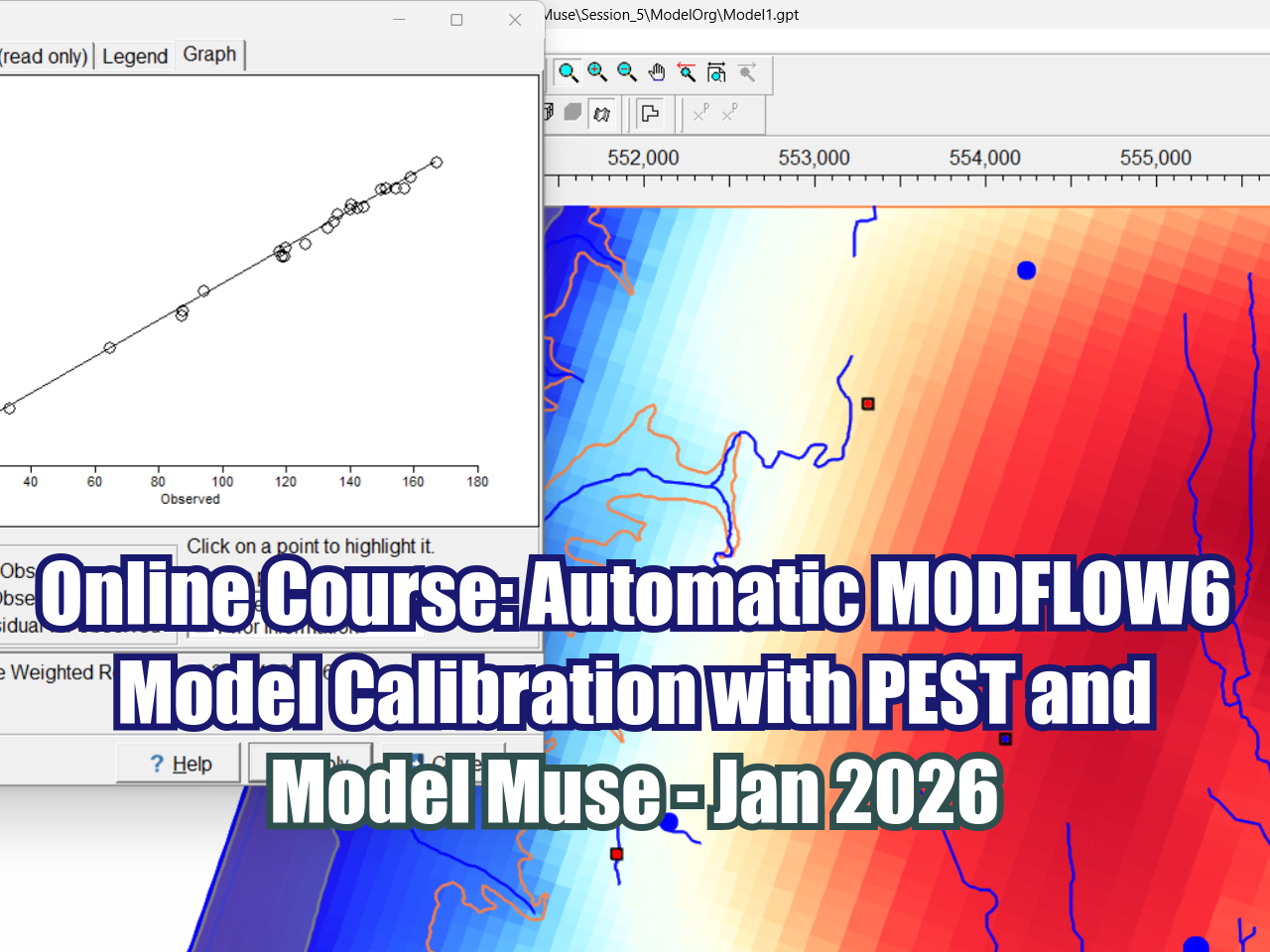
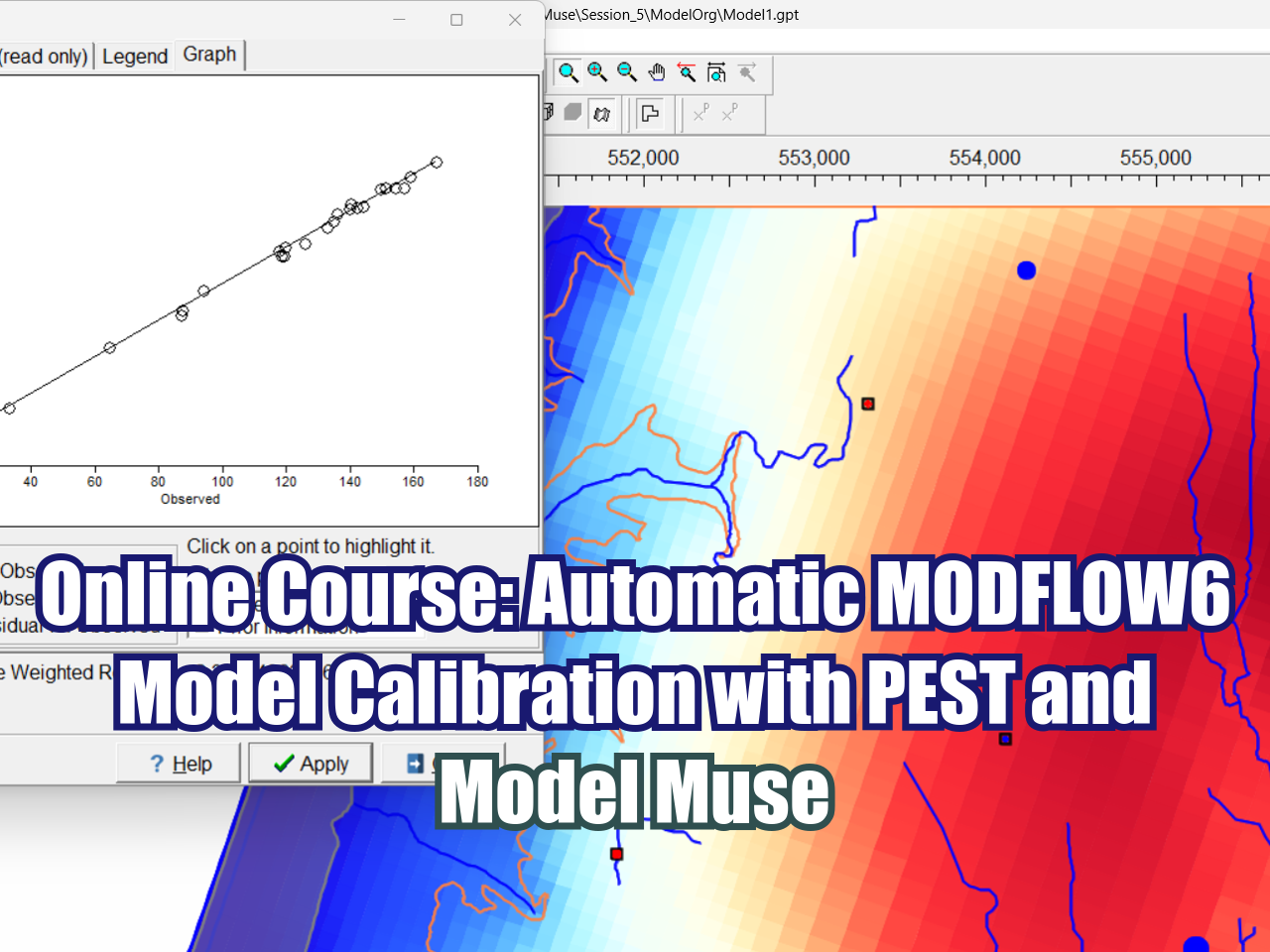
The calibration of hydrogeological models is the process of adjusting hydraulic parameters so that the predicted hydraulic heads and flows closely match observed data. Due to complexities in parameter distribution, model geometry, boundary condition conceptualization, and other factors, calibration can be time-consuming and may sometimes have limited success. However, tools like PEST, integrated with Model Muse, significantly accelerate the calibration and uncertainty analysis of groundwater models. This course will cover automatic calibration examples using the PEST tool
for MODFLOW6 models in Model Muse. Some Python codes are used to review the stage of the PEST implementation, however no Python knowledge is required.
Learning Outcomes
At the end of the course the student will be capable of:
Understanding the PEST implementation in Model Muse for MODFLOW models.
Use uniform of distributed (pilot points) hydraulic parameters in PEST.
Apply PEST to geospatial models with a series of boundary conditions.
Content
The course is divided into 6 sessions. These are topics considered for each session:
Session 1 - Basic PEST implementation on a local scale model
This session presents an introductory example of using PEST with a groundwater model on a local scale that includes two boundary conditions as parameters and hydraulic heads as calibration targets. Topics covered will include:
An overview of PEST implementation in Model Muse..
Setting up hydraulic conductivity (K) and recharge as parameters for PEST calibration.
Running a PEST simulation and analyzing the output results.
Session 2 - Automatic calibration of MODFLOW 6 with Pest in heterogeneous media with two observation types
This session provides an example of a multilayered groundwater flow model that has a regional flow from a general head to an interpolated over vertex head with recharge and drain boundary conditions. Here we will cover:
Implement four PEST parameters of K and drain conductivities.
Setup head and flow as PEST observations.
Run and analyze the Pest results
Session 3 - Distributed parameter estimation using pilot points of a MODFLOW 6 - PEST peninsula model
This session provides an applied example of the implementation of pilot points of PEST for the hydraulic conductivity on the peninsula groundwater flow model. We will include:
PEST simulation with 20 observation points.
A definition of distributed pilot points from a shapefile.
Conceptualization of hydraulic conductivities, GHB conductance and recharge rate as PEST parameters.
Session 4 - Groundwater modeling on a hillslope area / Construction and simulation
This session covers the construction of the numerical model going from the configuration of the aquifer properties and boundary conditions to the simulation and visualization of the hydraulic heads. We will analyze the difference among observed - calibrated heads giving an brief analysis of the head distribution and the definition of parameters for the PEST automatic calibration.
Defining the grid and conditions of the aquifer layers in Modflow andModel Muse.
The insertion of objects representing regional flow, sea, recharge, drainage and evapotranspiration.
Implementation of 24 observation points using the HOB package.
Session 5 - Groundwater modeling on a hillslope area / PEST Implementation
Over the regional model built in Session 4 we will implement PEST for the automatic parameter estimation of 2 hydraulic conductivies and recharge rate. The whole process of PESt implementation is explained step by step and a discussion is given over the role from initial values on the PEST estimation performance.
PEST setup and parameter defintion.
Implementation of observation points in PEST.
Review of the PEST files, and evaluation of initial values on the PEST performance.
Session 6 - PEST over a regional model in MODFLOW 6 with Voronoi grids
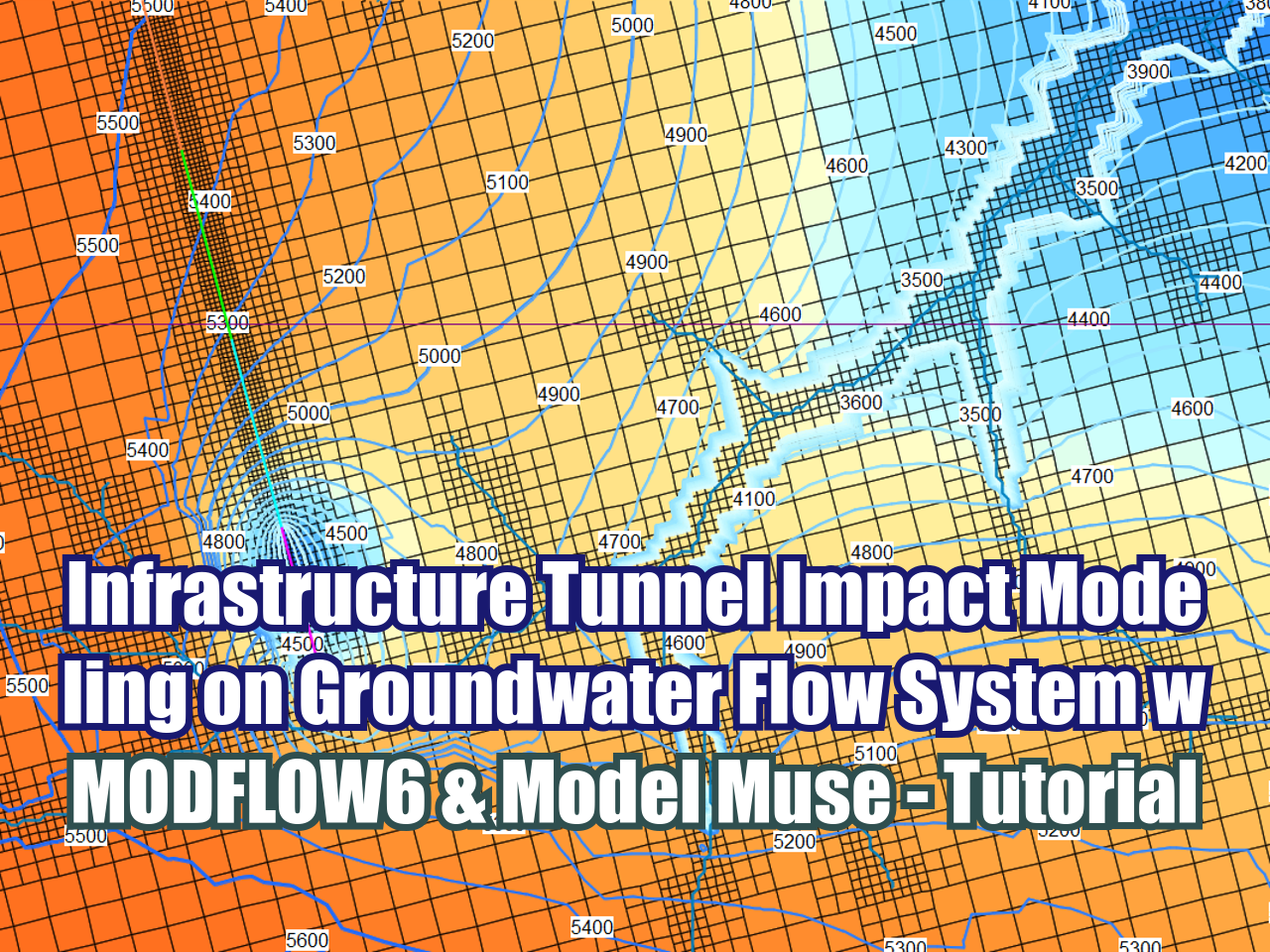
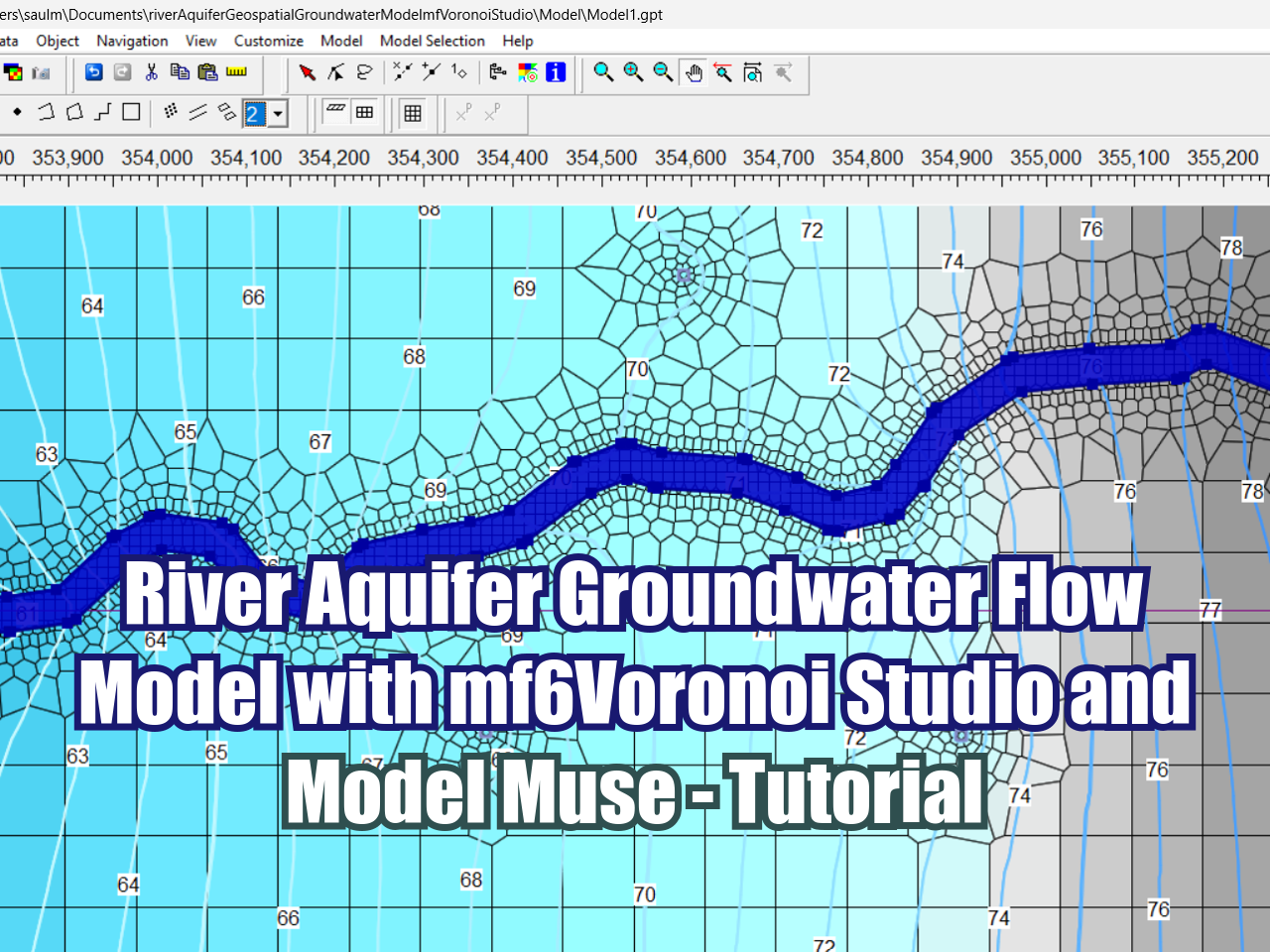
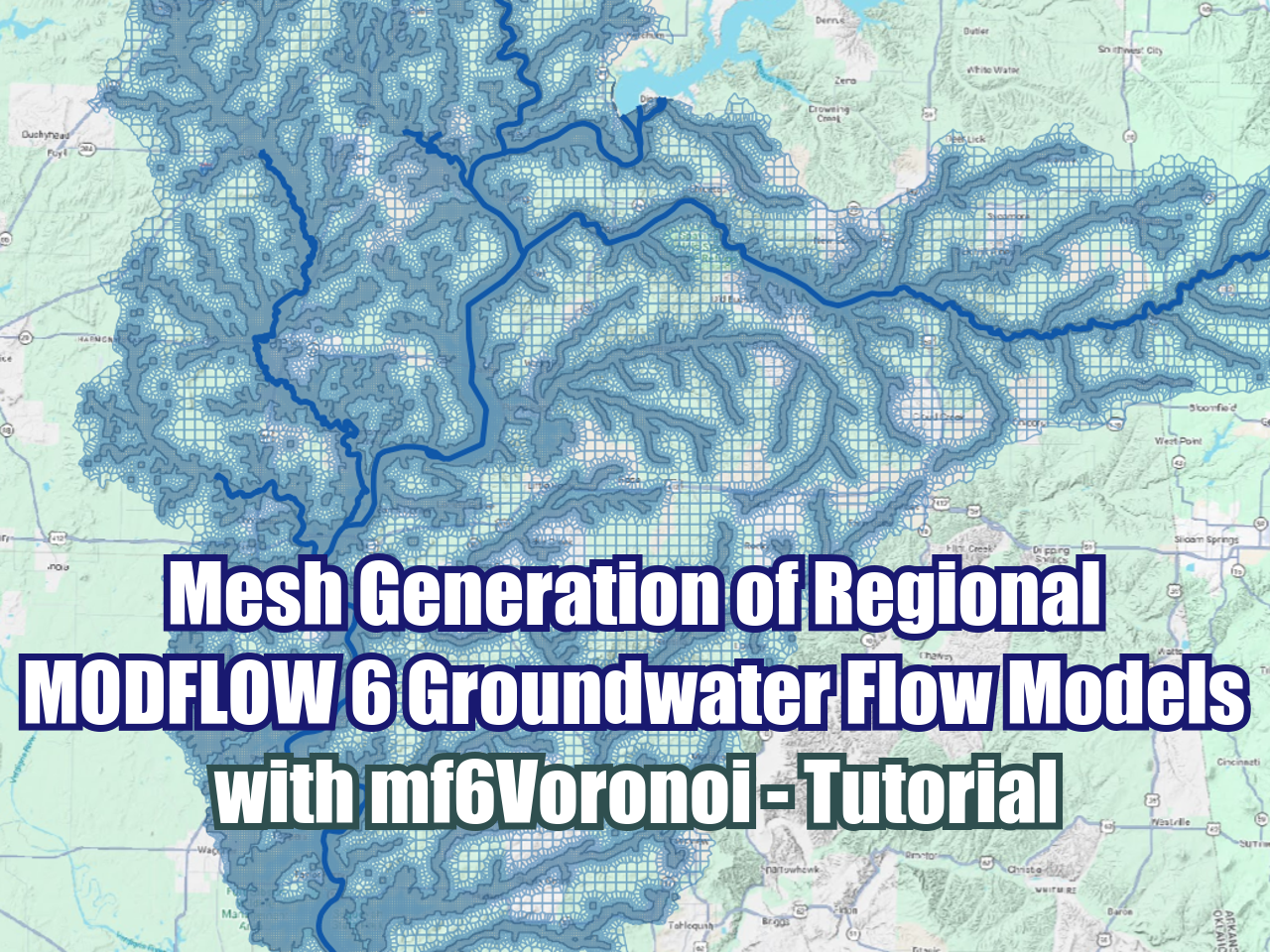
We can work with groundwater models based on Voronoi grids in Model Muse. This example covers the steps of model grid generation with the Python package mf6Voronoi and the configuration of hydraulic parameters and observation points with Model Muse. The model has different geological units that includes a quaternary and 10 observation points.
Grid generation and basic model setup with mf6Voronoi.
Configuration of hydrogeolical units and boundary conditions in Model Muse.
PEST configuration, run and evaluation of head and parameters.
Final Exam
Trainer

Saul Montoya M.Sc.
Hydrogeologist - Numerical Modeler
Mr. Montoya is a Civil Engineer graduated from the Catholic University in Lima with postgraduate studies in Management and Engineering of Water Resources (WAREM Program) from Stuttgart University – Germany with mention in Groundwater Engineering and Hydroinformatics. Mr Montoya has a strong analytical capacity for the interpretation, conceptualization and modeling of the surface and underground water cycle and their interaction.
He is in charge of numerical modeling for contaminant transport and remediation systems of contaminated sites. Inside his hydrological and hydrogeological investigations Mr. Montoya has developed a holistic comprehension of the water cycle, understanding and quantifying the main hydrological dynamic process of precipitation, runoff, evaporation and recharge to the groundwater system.
Over the last 9 years Saul has developed 2 websites for knowledge sharing in water resources: www.gidahatari.com (Spanish) and www.hatarilabs.com (English) that have become relevant due to its applied tutorials on groundwater modeling, spatial analysis and computational fluid mechanics.
Methodology
Some details of the course methodology:
The teaching part is developed by videos in our elearning platform.
Online support for questions regarding the course content.
Practical lessons videos will be available for 1 year.
To achieve a digital certificate you must submit the final exam after 1 month.
Digital certificate available at approval of the final exam
Date and time
January 2026 (Amsterdam Time)
Tuesday 13 from 6:00 pm to 8:00 pm.
Thursday 15 from 6:00 pm to 8:00 pm.
Tuesday 20 from 6:00 pm to 8:00 pm.
Thursday 22 from 6:00 pm to 8:00 pm.
Tuesday 27 from 6:00 pm to 8:00 pm.
Thursday 29 from 6:00 pm to 8:00 pm
Cost and payment method
Price: $250 ($220 before 20 December 2025)
This online course will be given on out elearning platform: elearning.hatarilabs.com . You will need to create an account first and then make your payment.
I you want to pay with a payment form, please request it to saulmontoya@hatarilabs.com
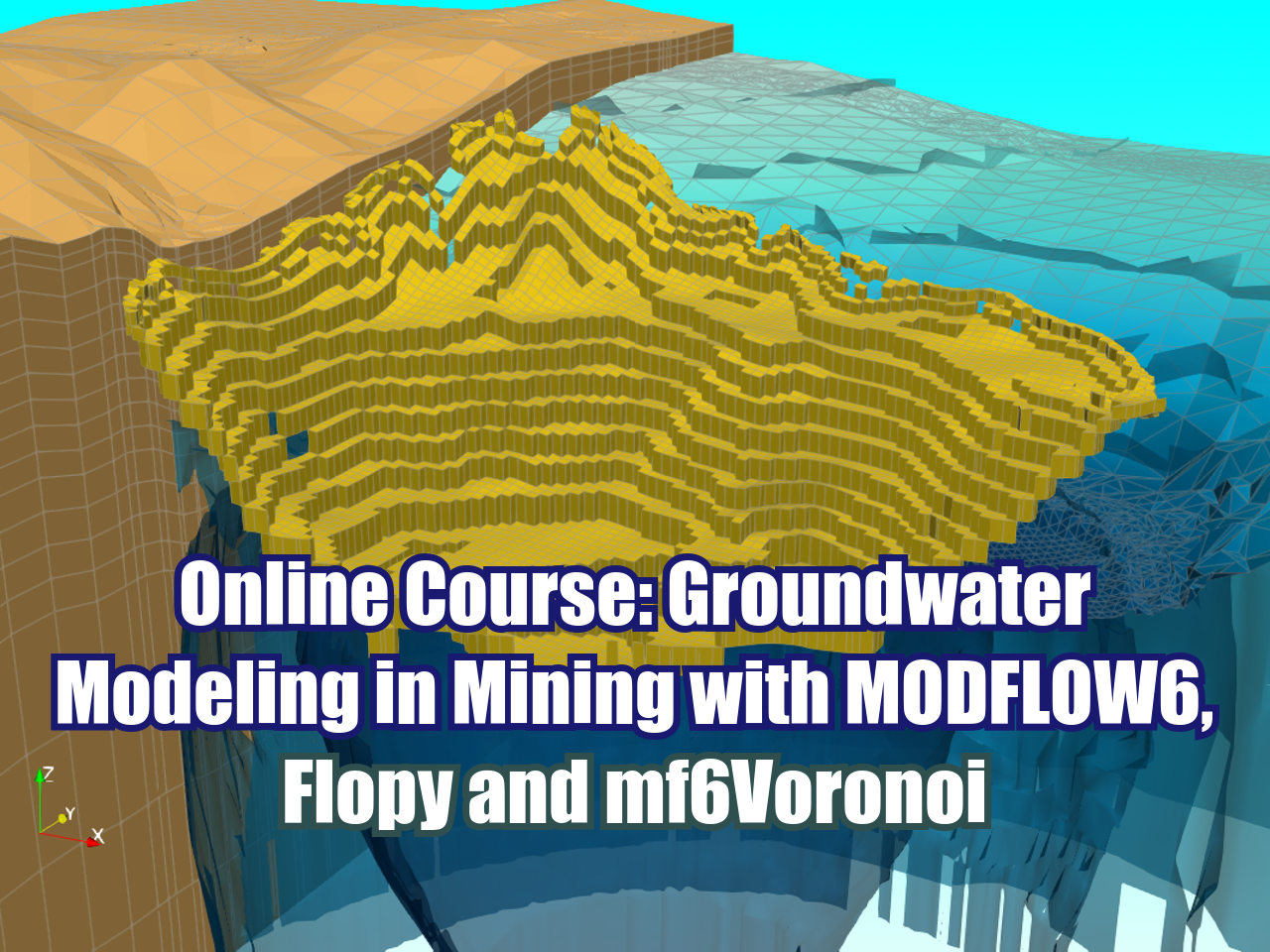











FloPy is the Python library that builds and executes MODFLOW models; this library has been enhanced to provide full support of MODFLOW 6 with most of its recent development is related to functionality for MODFLOW 6, tools to use vector and raster spatial data and common plotting and export functionality.