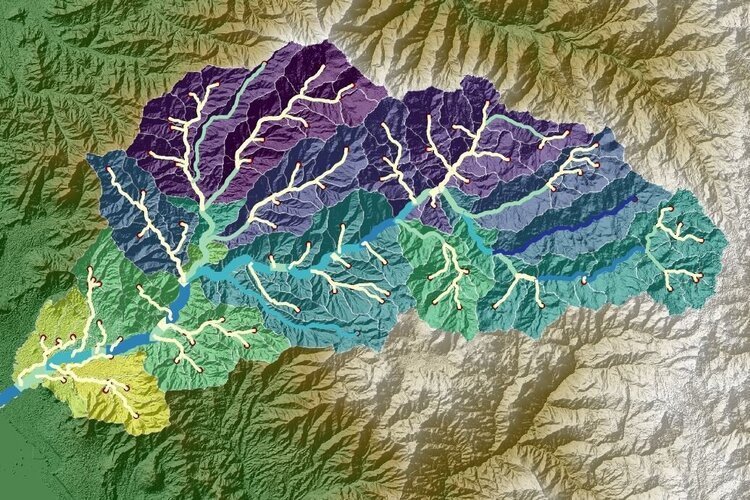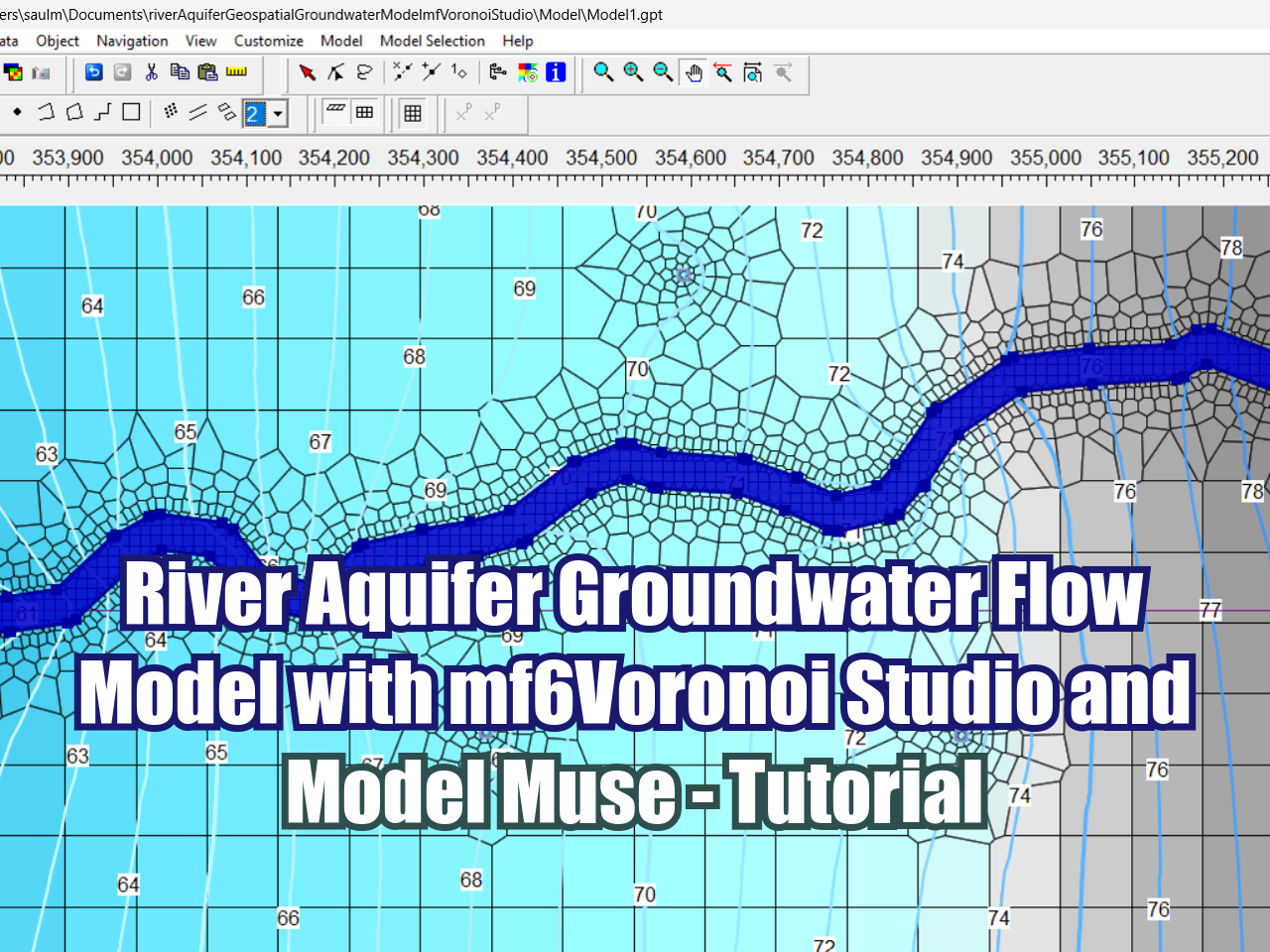
7 Solved Questions about Conceptualization, Construction and Calibration of Hydrogeological Models

Constructing and calibrating numerical models can be a challenging task in terms of time, available data and professional abilities of the modeler. Since this work is usually done alone, there are many questions about the conceptualization of the physical environment, the construction of the model and the calibration with observed data. Based on the questions asked by some attendees of our webminars, we have written this article for all the confused hydrogeological modelers.

Read More
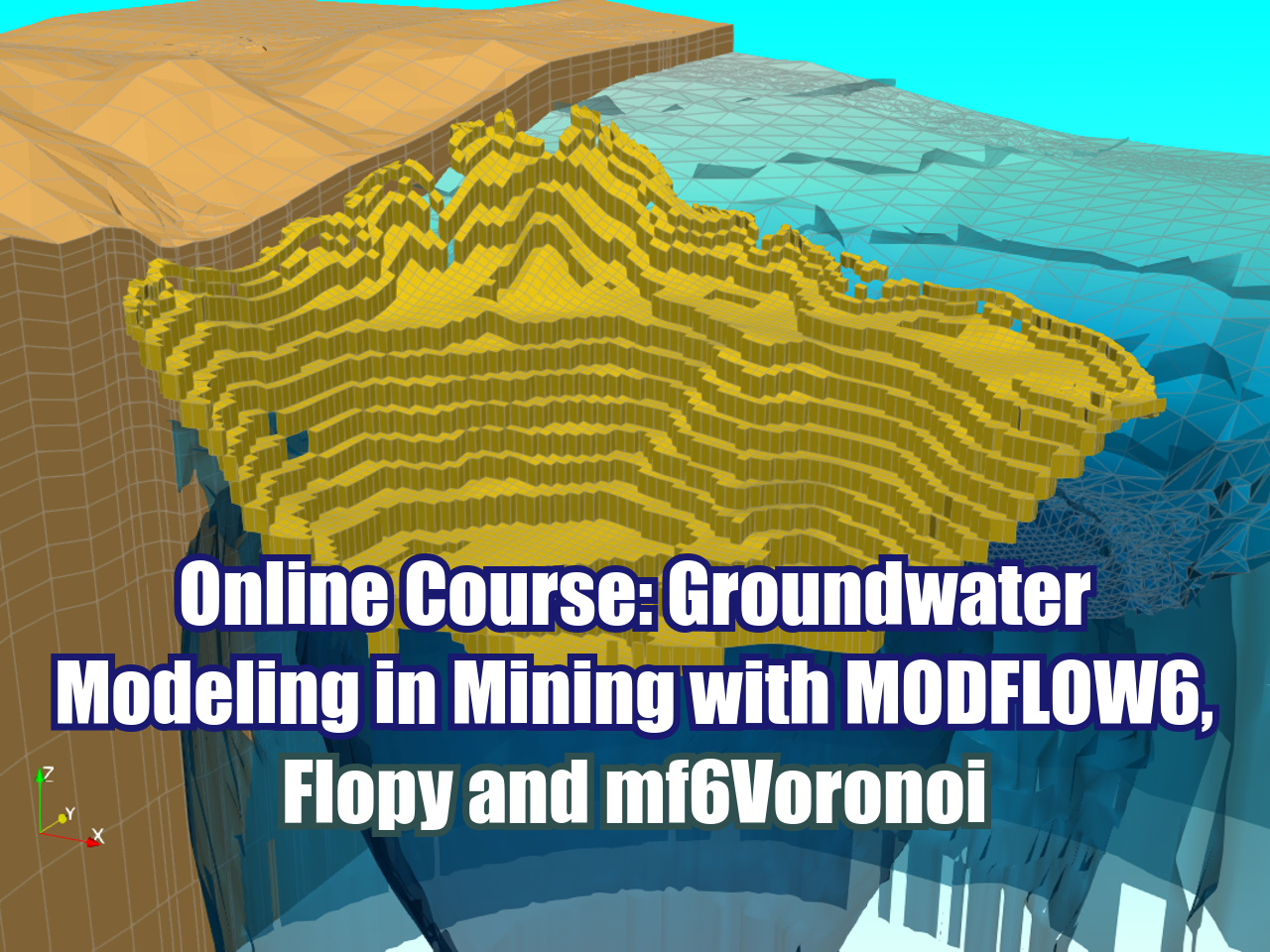
Key concepts for modeling groundwater flow driven by geothermal energy

For most hydrogeologists numerical modeling of groundwater flow is still new and brings several challenges when dealing with input data, model construction and simulation. Most of our modeling efforts are done in gravity driven groundwater flow on shallow aquifers solved by Darcy law equations. Sometimes we excel ourselves in conceptualizing "advanced" topics as unsaturated flow, contaminant transport, variable density or baseflow calibration. What about if we consider another driving force besides gravity? Will out lives be happier/miserable? Could we cope with the huge amount of required data?

Read More

How relevant is evapotranspiration in the groundwater flow regime?

Evapotranspiration is the mixed process of soil evaporation and transpiration of plants. This process is not included in many Hydrology books or in hydrological methods like the rational method, SCS, among others. Evapotranspiration is not relevant in when calculating maximum floods, but it is considered in water balances of superficial water and groundwater.

This article shows the relevance of the evapotranspiration process in the conceptualization and modeling of groundwater, indicating which would be the errors and inaccuracies of not considering this process.

Read More

Is brackish water present in all aquifers? How does it affect groundwater?

We see groundwater as a water reservoir inside the earth crust. It is defined that the top of the groundwater reservoir is called water table, but we rarely ever ask ourselves how deep groundwater is or about its quality. A complete vision of the hydrogeological system requires the understanding of the current state of groundwater quality and quantity.

Read More

Parameter Optimization Simulation for a Basin Model with HEC HMS

Model optimization involves adjusting parameter values so that the simulated results match stream flows as closely as posible. The software have two different search algorithms for the optimization as well as a variety of objective functions to measure the goodness of fit between simulated and observed stream flow.

Optimization trials are quite simple to set up and compute. This tutorial show the complete procedure to run a optimization for a hydrological model on a andean basin.

Read More

What data do you need for hydrogeological modeling?

A hydrogeological evaluation needs a numerical representation of the groundwater flow regime. Numerical models are a great tool to evaluate the current and future conditions of groundwater flow. In order to make a model, it is necessary to have geological and climate data, among other types.

The following list describes the input data needed to carry out a hydrogeological modeling. The information required could be either in tabular or vectorial format.

Read More

Working with Sentinel 2 Imagery on QGIS

Sentinel-2 carries an innovative wide swath high-resolution multispectral imager with 13 spectral bands for a new perspective of our land and vegetation. The mission is based on a constellation of two identical satellites in the same orbit, 180° apart for optimal coverage and data delivery. Together they cover all Earth’s land surfaces, large islands, inland and coastal waters every five days at the equator (source ESA).

This is a group of videos called "Working with Sentinel 2 Imagery on QGIS" that shows the complete procedure to download, represent and process Sentinel 2 images in QGIS.

Read More